
Capturing a Place with Ambisonics
How do you get the best results when in the field?
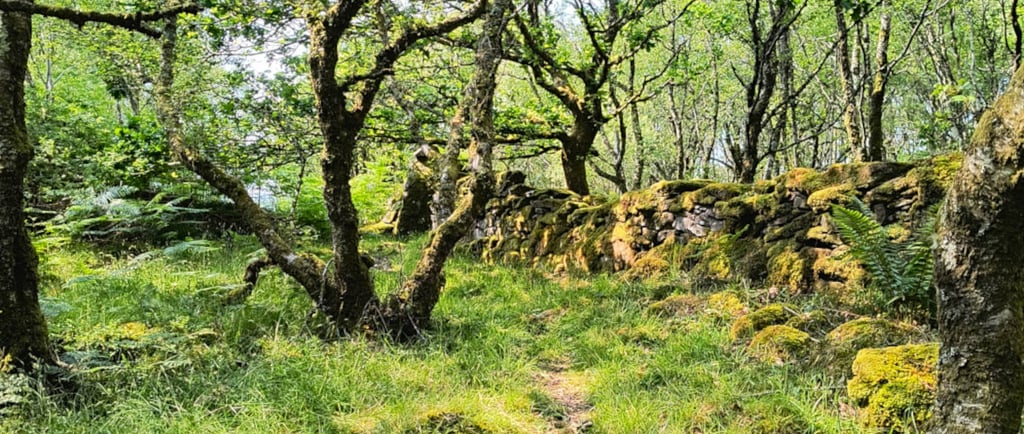
The first thing that normally happens when somebody arrives for the residency is they stand in the woodland garden here and notice the sound that's missing from the soundscape they're used to, and that is anthropophony.
Three Voices of Nature
Bernie Krause, the famous naturalist and soundscape ecologist, redefined the sources of the natural soundscape in terms of their three main components: geophony, biophony, and anthropophony
Geophony (the sound of naturally occurring non-biological sounds like thunder, wind or rain)
Biophony (collective acoustic signatures generated by all sound-producing organisms in a given habitat at a given moment.) and finally…
Anthropophony, which is the sounds of us split into two subcategories: controlled sound, such as music, language, and theatre, and chaotic or incoherent sound, sometimes referred to as noise.
Learning to Listen
The lack of sound pollution can sometimes be overwhelming to unaccustomed ears. It makes you want to be still, and rather than just hearing, you start to listen, and this is the first step to capturing a place with audio.
Listening to your environment in great detail, even if you at first think it is almost silent, brings the smallest sounds into focus. Birds in the far distance start to enter your personal soundscape, as well as the textures of a breeze across reeds around a loch fed by a small stream far away. Louder, more local sounds are tempered by concentrating on the distant ones until the space is defined.
Into the Field
Now the recording process can begin. The set-up is simple. The ambisonic mic is generally used on a lightweight stand and connected to the recorder. I then point out a few things that need to be done to get the best results. The first one is to listen again but with headphones on. How does it sound? Is there the sound of the microphone lead being blown by the wind and hitting the stand or any other undesired extraneous noise? Next, setting the recording levels to make sure there's as little floor noise from the microphone as possible. Once all's good, it's time to press record and label your recording by simply stating the date and your location. Importantly, move well away from the microphone, because it's a three-dimensional recording that you are making and if you are close to the mic your body will create a shadow on playback in the three-dimensional sphere.
When recording with an ambisonic microphone, you monitor it with headphones which are being fed a binaural version of the sound you are capturing. It immediately sounds fascinating and the whole process is extremely meditative. It's a bit like viewing a slide under a microscope. Binaural playback is important as it simulates the hearing cues created by acoustic interaction between our bodies and the environment around us and gives a good indication of how the ambisonic recording will sound through an array of loudspeakers once back in the studio — and of course, a binaural rendering for future headphone users.
The best recordings come with patience. Over time, all the wildlife disturbed by approaching the site and setting up begin to return and the soundscape starts again.
Recording this way by being still for long periods becomes a very meditative experience, and this stillness with deep listening is one of the great benefits of field recording.
Positive Ambisonics Residency Tayvallich, Scotland © 2026