
The Shape of Sound
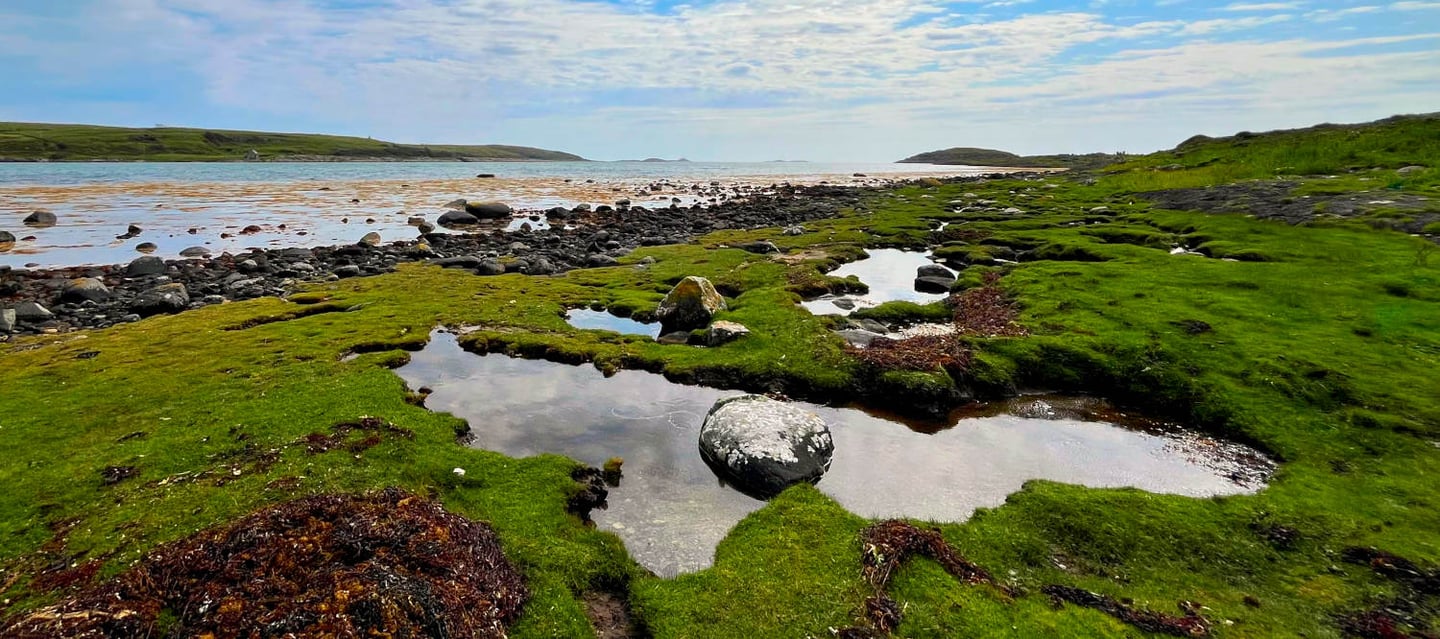
During the residency I'm interested in songwriters, composers, and sound artists who want to explore how the details of the local sound environment — lochs, coastline, Atlantic rainforest and wider landscape — can be harnessed in sound and music. This might involve field recording and sound transformation, close attention to listening perspective, and practical work with material captured on site. There's a dedicated space for this work — less a conventional recording studio, more an exploratory workspace built around an eight speaker, ambisonic array, where ambisonic and traditional field recordings can be combined and reshaped to make spatial environments.. While spatial playback is available for those who want it, traditional stereo for those whose practice doesn't call for the full spatial setup is also available. Work can range across a continuum, from songs written directly from place, through abstract space-built composition, to sound-art closely tied to the ecology of the place.
How ever you choose to work you can leave with binaural, stereo, multichannel and B format versions of your work.
Songwriters, composers, and sound artists will be encouraged to approach this from multiple angles, using the residency to test ideas that might otherwise be difficult to realise. The residency suits songwriters, acousmatic composers, installation artists, and those working with live electronics, acoustic instruments, or a mix of both, as well as performance artists whose work engages sound in relation to physical objects. One-to-one mentorship is there for anyone who'd like it, at whatever point it's useful — whether that's guidance on field recording technique, working with the ambisonic setup in the studio, or talking through a piece as it develops.
A self-directed residency is just as welcome as a mentored one.

Positive Ambisonics Residency Tayvallich, Scotland © 2026